

When a school proprietor in Ghana hears that a school management system is free, the first reaction is usually suspicion. It should be. Software costs money to build, host and support. If the school is not paying, somebody else is, and a proprietor deserves to know who.
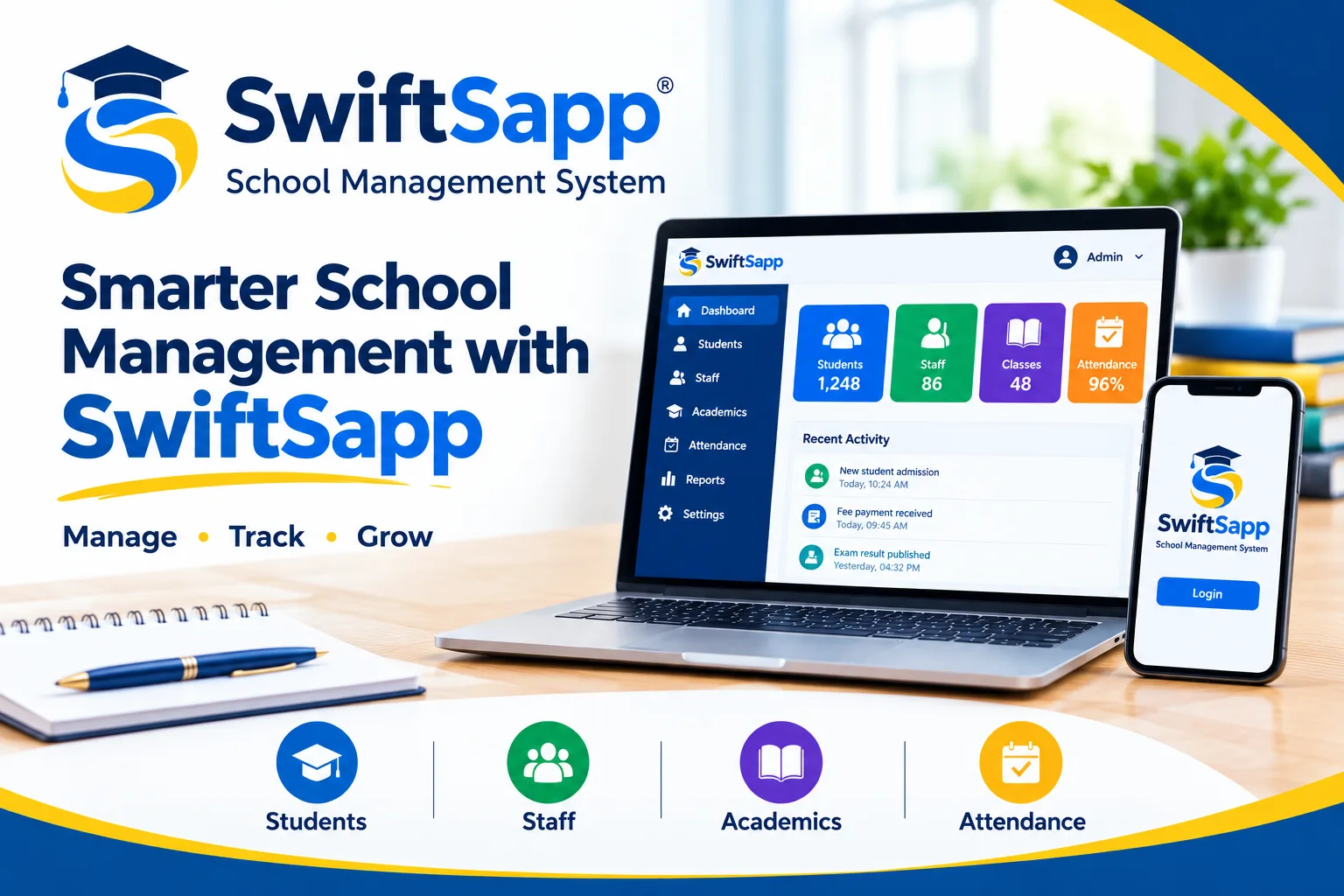
SwiftSapp is a school management system built for Ghanaian basic schools, from Creche through JHS. Schools pay nothing for it through the 2026/2027 academic year. This article explains how that works and what a school should ask before trusting any free offer, including ours.
Who pays instead
SwiftSapp is partner-subsidised. Education-focused partners and corporate social responsibility sponsors cover the cost of hosting, support and development. The school uses the system; the partners carry the bill.
This is not a new idea. Textbooks, school buildings and boreholes have been funded this way in Ghana for decades. Applying the same model to school software simply recognises that a private school charging modest fees in Kasoa or Tamale cannot easily find GHS 20,000 a year for a software licence, yet has the same record-keeping problems as a school that can.
What free actually includes
Free offers often come with a catch: a limit on student numbers, or the one module you need most locked behind an upgrade. So it is worth being specific.
- No per-student charge. A school with 150 pupils and a school with 900 pay the same: nothing.
- No locked modules. Fees, academics and report cards, attendance, gate security, parent communication, staff payroll and the parent app are all included.
- SMS is included. There are no message credits to buy or top up.
- Setup is included. Existing student records are imported for the school, even from a photographed class list.
Why there is an end date, and what comes after
The offer runs through the 2026/2027 academic year. Some people read an end date as a warning. We think it is the opposite. A promise of “free forever” cannot be checked and cannot be planned around. A stated period can.
After that period, SwiftSapp will move to competitive pricing. We say so now because a school should know what it is walking into. A school that joins today gets the full system at no cost until then, and by the time a price applies it will know from its own experience whether the system has earned a place in the budget.
Whatever a school decides at that point, its data remains its own. Student records, marks, bills and payments can be exported.
Five questions to ask any free school management system
These apply to SwiftSapp as much as to anyone else.
- Who is paying? “It is just free” is not an answer.
- For how long, and what happens after? Ask for both in writing.
- Is anything locked? Ask which features need an upgrade.
- Can we get our data out? Ask to see an export before you commit.
- How does the provider earn money? Some free systems charge parents on every payment or sell data. Ask directly.
A provider that answers all five plainly is offering a real deal. One that turns vague on the fourth or fifth question is telling you what the true price is.
What this means for schools
For years, a school management system in Ghana has been something larger private schools could afford and smaller ones could not. The result is that the schools with the thinnest margins are the ones still tracking fees in exercise books and writing report cards by hand.
A subsidised model changes who gets access. A school does not need to choose between a new classroom block and knowing exactly who owes fees. It can have the second at no cost, and spend its money on the first. Schools that want to see how it works can read more at swiftsapp.com/pricing.
Published By: Justice Donkoh | GESHub.org


