
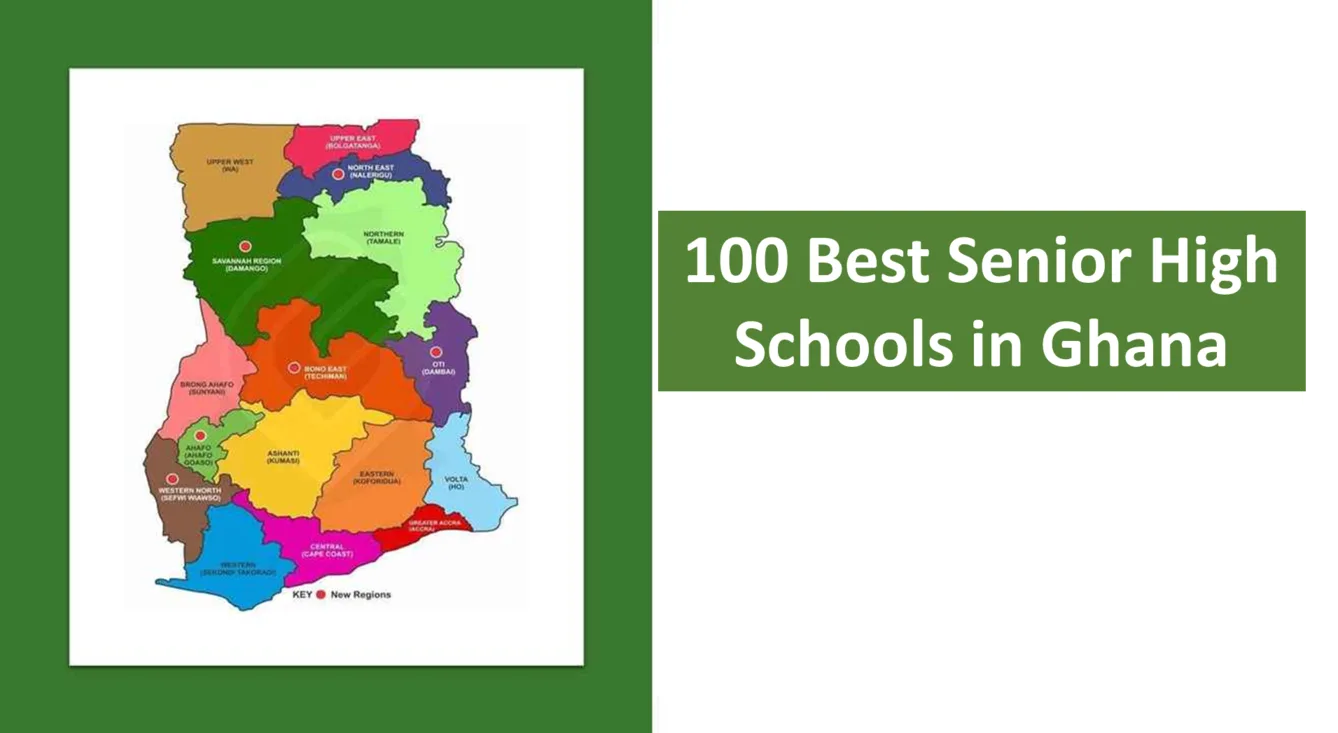

The 2025 EN Analytics Top 100 Senior High School Rankings offer more than just a national league table—they provide a powerful lens into regional academic strength, depth, and competitiveness across Ghana. Drawing on cumulative performance in the National Science and Maths Quiz (NSMQ) since 2013, with heavier emphasis on recent outcomes, the rankings reveal which regions consistently produce top-performing schools and where emerging progress is taking place.
Below is a regional breakdown of how Ghana’s sixteen regions are represented within the Top 100 senior high schools, highlighting dominant regions, rising contenders, and persistent disparities shaping the national education landscape.
Ashanti Region – Ghana’s Academic Powerhouse
The Ashanti Region leads the nation, with an impressive 22 schools featured in the Top 100, the highest representation of any region. Long regarded as the heartland of academic competition, Ashanti continues to dominate through depth, consistency, and institutional legacy.
Top-performing schools from the region include:
- Prempeh College
- Opoku Ware School
- Kumasi High School
- KNUST Senior High School
- Kumasi Secondary Technical School
The region’s strength cuts across Category A, B, and C schools, reflecting a well-established culture of academic competitiveness and strong participation in the NSMQ.
Eastern Region – Strong Depth and Consistency
With 19 schools in the Top 100, the Eastern Region ranks second nationally. The region stands out for its balanced representation across school categories and consistent national performances.
Key institutions include:
- St. Peter’s SHS, Nkwatia
- Pope John’s Seminary, Koforidua
- Koforidua Secondary Technical School
- Aburi Presbyterian SHTS
The Eastern Region’s sustained presence underscores the effectiveness of disciplined academic structures and long-term participation in national competitions.
Central Region – Excellence at the Top
Although the Central Region has fewer schools in the Top 100 compared to Ashanti and Eastern, it boasts exceptional strength at the elite level.
Leading schools include:
- Mfantsipim School
- Adisadel College
- St. Augustine’s College
- University Practice SHS
- Ghana National College
Notably, Mfantsipim School’s back-to-back NSMQ victories have elevated the region’s profile, reinforcing Central Region’s reputation for producing some of Ghana’s finest academic institutions.
Greater Accra Region – Strong Urban Representation
The Greater Accra Region continues to hold a solid position in the Top 100, supported by long-established urban schools with strong academic traditions.
Prominent schools include:
- Presbyterian Boys’ Secondary School (PRESEC–Legon)
- Accra Academy
- St. Thomas Aquinas SHS
- Achimota School
- Chemu SHS
PRESEC–Legon’s continued dominance at the top of the national rankings ensures Greater Accra remains central to Ghana’s academic narrative.
Volta Region – Technical and Academic Balance
The Volta Region maintains a respectable presence in the Top 100, anchored by schools that combine technical orientation with academic rigor.
Key representatives include:
- Keta Senior High Technical School (KETASCO)
- Mawuli School
- Bishop Herman College
- Anlo SHS
KETASCO’s position among the top 10 nationally highlights the region’s growing influence, particularly among Category B institutions.
Western Region – Steady National Competitiveness
The Western Region continues to feature prominently in the Top 100 through schools with consistent NSMQ participation and regional dominance.
Leading institutions include:
- G.S.T.S, Takoradi
- Archbishop Porter Girls’ Secondary School
- St. John’s School, Sekondi
- Takoradi SHS (TADISCO)
The region demonstrates strength in both boys’ and girls’ education, particularly in science-focused institutions.
Northern, Upper East, and Upper West Regions – Emerging Representation
Northern Ghana remains underrepresented in the Top 100, though notable schools continue to carry regional visibility.
Key schools include:
- Tamale SHS (Northern Region)
- St. Francis Xavier Junior Seminary, Wa (Upper West)
- Notre Dame Seminary SHS, Navrongo (Upper East)
While numbers remain limited, consistent appearances by these schools suggest gradual progress and the potential for future growth.
Newer Regions – Persistent Gaps Remain
Regions such as Ahafo, Savannah, North East, Oti, and Western North have little to no representation in the Top 100. This pattern reflects ongoing challenges related to:
- Limited science infrastructure
- Fewer opportunities for national competition exposure
- Resource and staffing constraints
These disparities highlight the urgent need for targeted educational investment and policy intervention to promote equity across all regions.
Conclusion
The 2025 EN Analytics Top 100 Rankings reveal a Ghanaian secondary education system marked by regional strengths, historical dominance, and emerging progress, alongside clear inequalities that require attention.
While regions like Ashanti, Eastern, Central, and Greater Accra continue to lead, the steady rise of schools from traditionally underrepresented areas shows promise. The rankings remain a vital tool for students, parents, educators, and policymakers seeking to understand where excellence thrives—and where support is most needed.
The full Top 100 national rankings, detailed regional tables, and a comprehensive explanation of the ranking methodology are available in the official EN Analytics report.
Stay tuned for more insights as we continue to explore Ghana’s evolving academic landscape.
Published By: Justice Donkoh | GESHub.org