
The primary responsibility of the central government in Ghana is to ensure the maintenance of peace and stability within the country. To achieve this goal, various security agencies have been established and empowered by the laws of the land.
In this blog post, we will provide an overview of these security agencies in Ghana and their respective roles in maintaining peace and stability.
The Ghanaian government has taken significant steps to establish, empower, and adequately fund these security agencies, recognizing their vital roles in safeguarding the nation.
Below, we present a comprehensive list of the security agencies in Ghana and highlight their relevance.
The Ghana Customs Excise and Preventive service
The Customs Excise and Preventive Service in Ghana has a distinct mandate focused on enforcing, regulating, and inspecting imports entering the country, in addition to border patrol duties. This agency plays a critical role within the Ghana Revenue Authority responsible for tax collection.
The Ghana Police Service
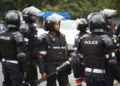
The Police Service in Ghana operates as a national security agency, under the command of the Inspector General of Police (IGP). The IGP, in turn, is accountable to the directives of the Police Council of Ghana.
The Ghana Police Service adheres to the motto of “Service with Integrity.” The core functions of the Ghana Police Service, as outlined in the Police Service Act of 1970 [Act 350] of Ghana, encompass the following:
- Ensuring effective crime detection and prevention.
- Conducting the apprehension (arrest) and prosecution of offenders with unwavering dedication.
- Maintaining ethical standards while preserving law and order.
- Enforcing the law in a professional and efficient manner.
The Ghana Armed Forces
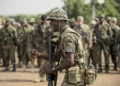
The Ghana Armed Forces is a unified agency comprising the Army, Navy, and Air Force. The President of Ghana holds the position of Commander-in-Chief, serving as both the highest military authority in Ghana and the supreme commander of the Border Guard Unit.
The origins of the Ghana Armed Forces trace back to the establishment of the Gold Coast Constabulary in 1879, which was formed by personnel from the Hausa Constabulary of Southern Nigeria.
The Gold Coast Constabulary was tasked with specific responsibilities related to internal security and police duties in the British colony of the Gold Coast. Notably, the regiment earned its first battle honor independently during its participation in the Ashanti campaign.
The Ghana Immigration service
Established by PNDC Law 226 in 1989, the Ghana Immigration Service is the sole institution vested with statutory authority and entrusted with the crucial responsibility of monitoring and supervising the entry, residence, employment, and departure of foreigners within the country.
The Ghana National Fire service
The Ghana National Fire Service operates as a part of the Ghana National Fire and Rescue Service, an agency overseen by the Ghanaian Ministry of the Interior. Its exclusive focus is on addressing incidents related to fire.
The Ghana Prison service
The Ghanaian prison system falls under the jurisdiction of the Ministry of Interior and holds the responsibility for the custody and management of sentenced offenders in all correctional facilities.
The roles of Security Agencies in Ghana
The security agencies in Ghana are primarily dedicated to ensuring the national security of the country. National security encompasses the safeguarding of the entire nation, with a central focus on protecting the nation and its citizens from external threats and potential dangers.
This fundamental concept of national security is carried out by these agencies through the continual maintenance of armed forces and the protection of state secrets.
Furthermore, the national security service delivered by Ghana’s security agencies encompasses both national defense and the safeguarding of various geopolitical, economic, and government interests.
Their mission is to maintain the safety and security of the country, safeguarding the integrity of the nation’s domestic institutions and systems that are essential for this purpose. Achieving this objective necessitates the presence of robust, active, and reserve forces, as well as effective intelligence operations.
Additionally, reinforcing law enforcement, counter-terrorism efforts, cybersecurity measures, and immigration policies are crucial aspects of protecting the homeland and ensuring the security of Ghana’s borders.
In conclusion, the security agencies in Ghana play a vital role in the nation’s progress and sovereignty. When it comes to the unwavering protection of lives and property in Ghana, we hope for fewer challenges and difficulties for these dedicated security agencies.
Source: GESHub.org