
The Ghana Education Service (GES) has introduced significant changes to the 2026 Senior High School (SHS) placement process for candidates who sat for the Basic Education Certificate Examination (BECE). The updated guidelines are designed to improve fairness, transparency, and efficiency under the Computerised School Selection and Placement System (CSSPS).
One of the biggest changes for the 2026 admission cycle is that candidates will now select their preferred Senior High Schools after the release of their BECE results, allowing them to make informed decisions based on their actual performance.
This guide explains everything candidates, parents, and guardians need to know about the 2026 SHS placement process, including school selection rules, placement procedures, tie-breakers, and self-placement options.
Major Changes to the 2026 SHS Placement Process
Unlike previous years, where BECE candidates selected their preferred schools before writing the examination, the Ghana Education Service has revised the process.
Under the new arrangement, candidates will:
- Receive their BECE results first.
- Review their academic performance.
- Select their preferred Senior High Schools based on their grades.
- Submit their choices for placement through the CSSPS.
The new system is expected to help candidates make more realistic school selections while reducing placement challenges experienced in previous years.
BECE Candidates Must Select Eight Schools
For the 2026 placement exercise, every BECE candidate is required to choose eight (8) Senior High Schools, representing an increase from the previous limit of seven schools. The selection must follow the Ghana Education Service’s category guidelines.
School Selection Categories
Senior High Schools have been grouped into four categories:
- Category A
- Category B
- Category C
- Category D
Candidates must carefully distribute their choices according to the approved selection rules.
Category A Schools
Candidates are required to select:
- One (1) Category A Boarding School
- One (1) Category A Day School located within their district
These schools are generally among the country’s most competitive second-cycle institutions.
Category B Schools
Candidates may select up to two (2) schools from Category B.
Category C Schools
The remaining school choices may come from Category C institutions, allowing candidates greater flexibility in completing their eight preferred schools.
Category C includes many public Senior High Schools across the country that offer both boarding and day programmes.
TVET Candidates Must Follow Separate Selection Rules
Candidates seeking admission into Technical and Vocational Education and Training (TVET) institutions must also comply with the category-based selection process.
However, all their selected schools must be TVET institutions. This ensures that students interested in technical and vocational education are placed within institutions that match their career interests.
Understanding Cluster Schools
The CSSPS also makes use of cluster schools during placement. Cluster schools serve as alternative options within the same category.
If a candidate cannot secure admission into their first-choice school because available spaces have been filled, the system automatically considers the next preferred school in the selected cluster until placement is successful.
Who Qualifies for SHS Placement?
To qualify for placement into any public second-cycle institution in Ghana, a candidate must:
- Possess a valid BECE certificate.
- Have completed BECE in either a public or private basic school.
- Meet the admission requirements of the selected programme.
Foreign applicants may also seek admission into Ghanaian Senior High Schools but must follow a separate admission procedure established by the Ghana Education Service.
How the CSSPS Places BECE Candidates
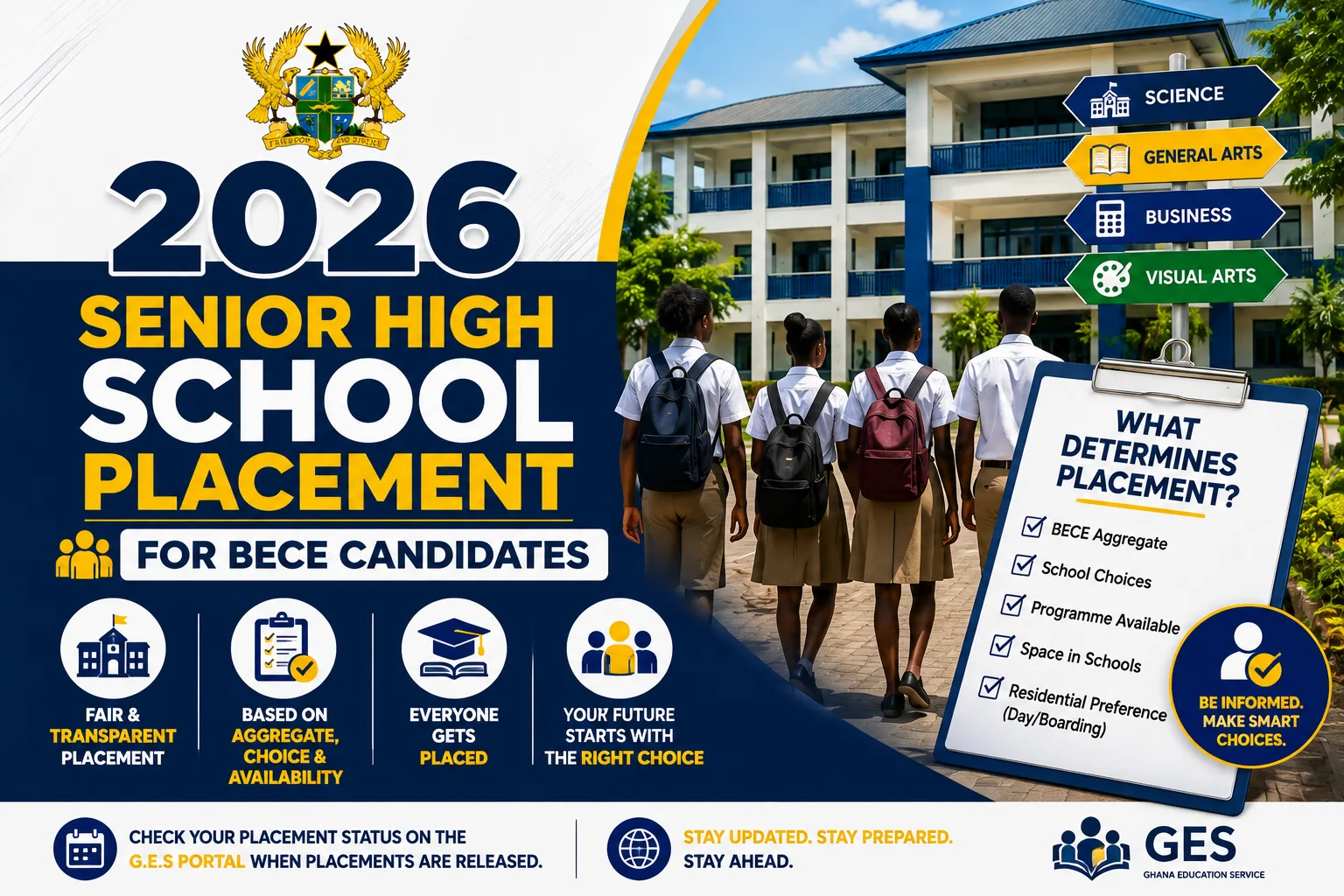
The Computerised School Selection and Placement System evaluates every candidate using several important criteria.
These include:
- BECE aggregate score
- Programme selected
- School preference
- Boarding or day option
- Available vacancies
- Residential preference
The placement system first checks whether a candidate meets the entry requirements for the selected programme. If qualified and space is available, placement is confirmed.
If available spaces have already been occupied by candidates with stronger academic performance, the system automatically proceeds to the candidate’s next school choice until placement is secured.
CSSPS Tie-Breaker Rules Explained
In situations where several candidates obtain identical grades while competing for limited vacancies, the CSSPS applies an official tie-breaker system.
The ranking process follows these stages:
1. Number of Grade 1s
Candidates with a higher number of Grade 1s receive priority.
2. Raw Scores
If candidates remain tied, the system compares their raw scores from the best six subjects.
3. Core Subject Performance
Where ties still exist, performance in the core subjects is used in the following order:
- English Language
- Mathematics
- Integrated Science
- Social Studies
These measures help ensure that placements are conducted fairly and objectively.
Self-Placement Option for Unplaced Candidates
Candidates who are not automatically placed through the initial CSSPS process may use the Self-Placement feature.
Through the CSSPS portal, candidates can:
- View schools with available vacancies.
- Select schools based on their aggregate.
- Choose programmes with available spaces.
- Change their selections multiple times before final enrolment.
The self-placement system provides another opportunity for qualified candidates to gain admission into public Senior High Schools.
Special Placement Arrangements
The Ghana Education Service also makes special placement provisions for certain groups of candidates.
Students with Special Needs
Some Senior High Schools reserve vacancies specifically for students with special educational needs to ensure inclusive access to secondary education.
Seminary Admissions
Seminaries conduct their own entrance examinations and interviews before forwarding the names of successful applicants to GES for placement.
Protocol Placements
Certain placements reserved for candidates connected to key stakeholders are processed separately. These applications are submitted directly by heads of schools to the Ghana Education Service for final consideration.
Important Advice for BECE Candidates
Candidates are encouraged to carefully assess their BECE results before selecting schools. Choosing a balanced combination of competitive and less competitive schools can improve the chances of gaining placement through the CSSPS.
Applicants should also ensure that their boarding or day preferences, programmes, and school categories comply fully with the Ghana Education Service guidelines.
Final Thoughts
The 2026 Senior High School placement process introduces important reforms aimed at making school selection more informed and improving the efficiency of the Computerised School Selection and Placement System.
By allowing candidates to review their BECE results before selecting schools, increasing the number of school choices to eight, and maintaining transparent placement and tie-breaker procedures, the Ghana Education Service hopes to enhance fairness and reduce placement-related concerns.
Candidates and parents are advised to follow all official GES and CSSPS instructions carefully during the school selection and placement exercise to maximise the chances of successful admission into their preferred Senior High School.
2026 CSSPS FAQs
1. When will BECE candidates select their Senior High Schools for the 2026 placement?
For the 2026 placement exercise, BECE candidates will select their preferred Senior High Schools after the release of their BECE results, allowing them to make informed choices based on their academic performance.
2. How many schools must candidates choose for the 2026 CSSPS placement?
Candidates are required to select eight (8) Senior High Schools, an increase from the seven schools permitted in previous years.
3. What are the SHS categories under the CSSPS?
The Ghana Education Service groups Senior High Schools into Category A, Category B, Category C, and Category D, with specific selection guidelines for each category.
4. Can a candidate choose more than one Category A school?
Yes. Candidates must include two Category A schools in their selection—one boarding school and one day school within their district.
5. What factors determine placement into a Senior High School?
Placement depends on several factors, including:
- BECE aggregate score
- Programme selected
- School preferences
- Boarding or day option
- Available vacancies
- Residential preference
6. What happens if a candidate is not admitted to their first-choice school?
The CSSPS automatically considers the candidate’s next preferred school until a suitable placement is found, provided the candidate meets the admission requirements.
7. What is the CSSPS tie-breaker system?
When candidates have identical grades, the system uses:
- Number of Grade 1s
- Raw scores from the best six subjects
- Performance in English, Mathematics, Integrated Science, and Social Studies
8. What are cluster schools?
Cluster schools are alternative schools within the same category. If a candidate’s preferred school is full, the system automatically considers the next school in the cluster.
9. What is CSSPS Self-Placement?
Self-Placement allows candidates who are not automatically placed to select from schools with available vacancies through the CSSPS portal.
10. Who qualifies for SHS placement?
Candidates who obtain a valid BECE certificate from a public or private school and meet the admission requirements are eligible for placement into public second-cycle institutions.
11. Can foreign students apply for SHS placement in Ghana?
Yes. Foreign applicants may apply but must follow the separate admission procedures established by the Ghana Education Service.
12. Are there special placement arrangements?
Yes. GES provides special placement arrangements for students with special needs, seminary applicants, and protocol admissions.
Published By: Justice Donkoh | GESHub.org