Stakeholders in Ghana’s education sector have proposed a major revision to the Free Senior High School (SHS) policy, suggesting that boarding students should cover their own boarding and feeding fees. They argue that only day students should continue to benefit from free education, allowing the government to allocate resources more effectively to improve the overall quality of education.
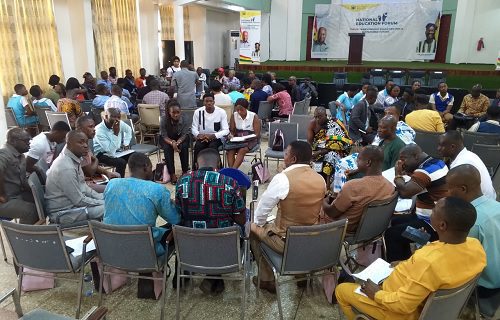
This recommendation was made at the Bono, Bono East, Ahafo, and Western North zone session of the ongoing National Education Forum in Sunyani. Stakeholders believe that this funding model will relieve the financial burden on the government while enhancing investment in other critical areas of the education sector.
Why the Proposal?
During the forum, participants discussed five key thematic areas:
✅ Infrastructure Development (both physical and educational technology)
✅ Quality Education Provision
✅ Education Financing
✅ Regulatory and Accountability Systems
✅ Evidence-Based Decision Making
The discussions brought together a diverse group of stakeholders, including academics, civil society organizations, parents, teacher unions, vice-chancellors, and education directors, who collectively called for reforms to sustain and improve the Free SHS policy.
A notable recommendation was the call for SHSs to venture into farming as a means of generating additional income to support student feeding. The stakeholders believe this would reduce dependency on government funds and provide practical agricultural training for students.
Additionally, they urged the government to make existing scholarship schemes more accessible, particularly for tertiary students, as financial challenges continue to hinder academic performance.
One of the biggest concerns raised at the forum was the poor state of educational infrastructure across the country. Stakeholders noted that:
📌 Over 5,000 school buildings are in a dilapidated state.
📌 There is a one-million-unit furniture deficit, forcing thousands of students to sit on bare floors.
To address these challenges, they recommended decentralizing furniture procurement to allow local artisans and community leaders to assist in providing desks and chairs for schools.
Stakeholders also stressed the need for the government to provide attractive incentives for teachers to boost morale and retain skilled educators in the system. They proposed that new school buildings should include accommodation for teachers, especially in rural areas, to improve teacher retention and effectiveness.
Concerns were also raised about poor sanitation facilities in many schools. The lack of female-friendly washrooms, in particular, was highlighted as a barrier to female education. The government was urged to prioritize sanitation improvements in schools to create a better learning environment.
Another key area of concern was limited access to technology in education. The stakeholders recommended heavy investment in digital infrastructure, STEM education, Artificial Intelligence (AI), and online learning to ensure Ghana’s education system remains competitive globally.
The stakeholders further proposed that teacher recruitment be decentralized, allowing school heads to be directly involved in selecting teachers for their institutions. They believe this approach will lead to a more efficient and effective education system.
To enhance safety, stakeholders suggested the establishment of police posts and CCTV cameras in schools. This, they argued, would provide students with a more secure environment to focus on their studies.
What are your thoughts on this proposal? Should boarding students pay for their own feeding and accommodation, or should the government continue to bear the full cost? Let us know in the comments!
Source: GESHub.org