

The National Teaching Council (NTC) in Ghana is making significant strides in improving the education system through its latest reform, the Ghana Teacher Licensure Examination (GTLE).
In a recent communication to Heads of Colleges of Education, the NTC emphasized an important point: “For the avoidance of doubt, no Diploma graduate is permitted to register and sit for the examination.” This decision by the Council has sparked discussions and debates within the education community.
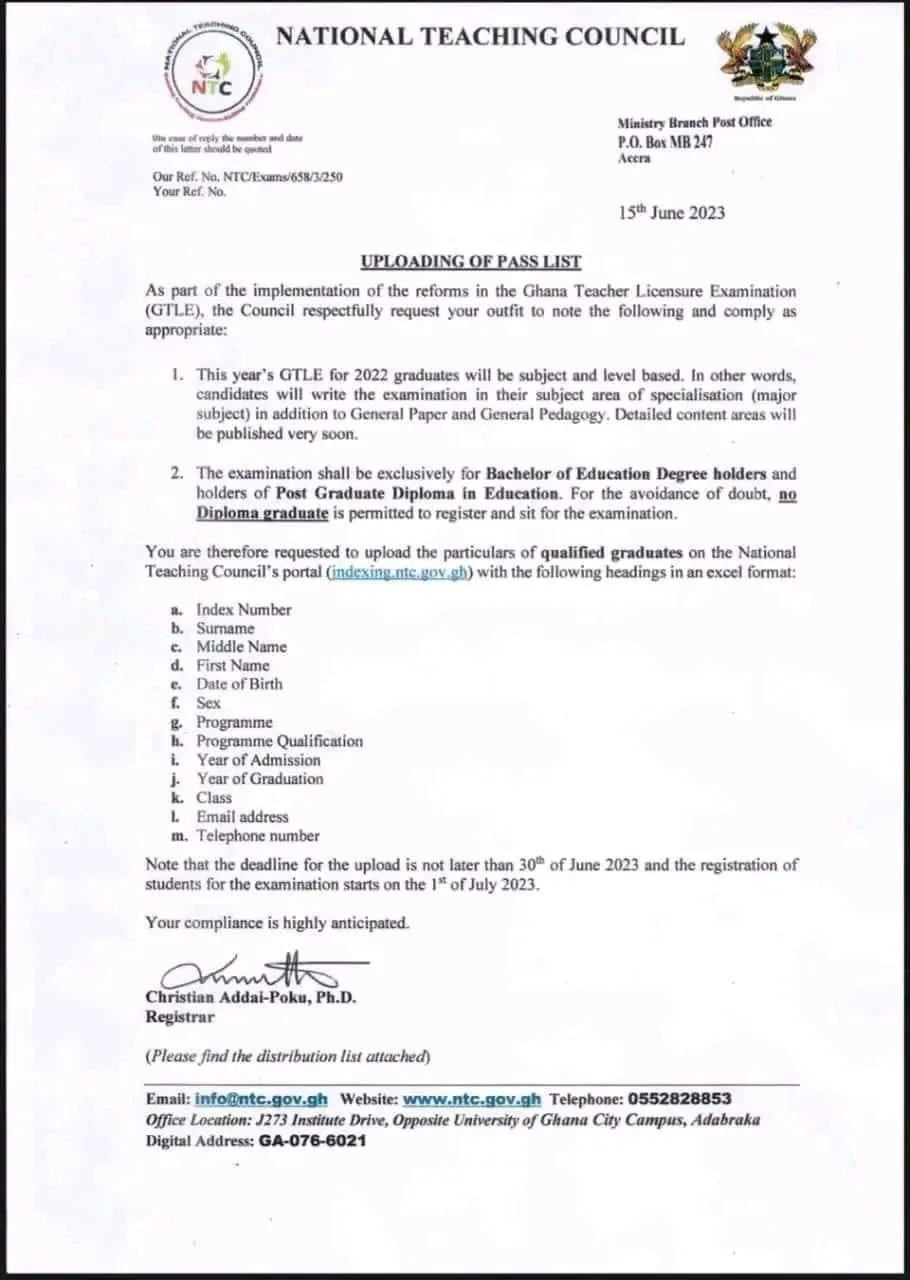
In this post, GESHub.org aim to shed light on the rationale behind this policy and its potential impact on the teaching profession in Ghana.
Note: The information provided in this post is based on the content of the letter addressed to Heads of Colleges of Education by the National Teaching Council (NTC) of Ghana. It is important for candidates to refer to official sources and stay updated on any subsequent announcements or changes regarding the Ghana Teacher Licensure Examination (GTLE).
Rationale behind Diploma Holder’s exclusion
Ensuring Subject and Level Expertise
One of the key objectives of the GTLE reform is to assess candidates’ subject area specialization (major subject) along with General Paper and General Pedagogy. By limiting the examination to Bachelor of Education degree holders and holders of Post Graduate Diploma in Education, the NTC aims to ensure that only individuals with comprehensive subject knowledge and pedagogical skills are eligible for licensure.
This specialization-based approach acknowledges the importance of subject expertise in effective teaching, as it allows teachers to deliver quality education in their respective fields.
Raising Educational Standards
The exclusion of Diploma graduates from the GTLE aligns with the NTC’s commitment to enhancing the overall quality of education in Ghana. While diplomas have been a valuable qualification in the past, the emphasis on bachelor’s degrees and postgraduate diplomas reflects the evolving educational landscape and the need for higher academic standards.
By raising the minimum qualification requirement, the NTC is striving to create a highly qualified teaching workforce that can address the complexities of today’s educational challenges.
Promoting Professionalism and Recognition
The GTLE’s restriction on diploma graduates also serves to elevate the teaching profession and enhance its recognition in society. With the licensure examination exclusively for degree holders and postgraduate diploma holders, the NTC is emphasizing the importance of professional development and continuous learning for teachers.
This move fosters a culture of professionalism and demonstrates the NTC’s commitment to upholding the highest standards in the teaching profession.
Ensuring Consistency and Quality in Teacher Training
The decision to exclude diploma graduates from the GTLE is closely tied to the standardization of teacher training programs. Bachelor’s degree and postgraduate diploma programs generally have a more comprehensive and rigorous curriculum, enabling teachers to acquire the necessary knowledge and skills to excel in their roles.
By aligning the licensure examination with these programs, the NTC ensures a consistent benchmark for assessing the competence of teachers and maintaining the quality of teacher education across the country.
Potential impact on the teaching profession
The NTC’s recent directive, stating that “no Diploma graduate is permitted to register and sit for the examination,” is a bold step towards transforming the teaching profession in Ghana. By focusing on subject specialization and raising the minimum qualification requirement, the NTC aims to improve the quality and professionalism of teachers.
While this decision may be met with differing opinions, it is important to recognize the underlying objective of the reform – to enhance education standards and equip teachers with the necessary skills to shape the future of Ghana’s education system.
As the GTLE continues to evolve, it is crucial for all stakeholders to engage in constructive dialogue and work together to build a stronger and more vibrant education sector in Ghana.
Published By: Justice Donkoh | GESHub.org









How about students who diploma in early childhood education