
In the realm of employment and compensation, understanding Base Pay Salary is essential for employees to grasp the foundation of their earnings. Recently, the Government of Ghana, in collaboration with the Fair Wages and Salaries Commission (FWSC), the Ministry of Labour, Jobs and Employment (MLJE), the Ministry of Finance (MoF), and Organized Labour, reached a significant agreement on the 2025 Base Pay adjustment for public sector workers in Ghana.
This agreement, finalized on February 20, 2025, includes a 10% increase in the Base Pay on the Single Spine Salary Structure (SSSS) for the entire year of 2025. But what exactly is Base Pay Salary, and how can employees calculate percentage increments on it? This blog post aims to provide a comprehensive understanding of Base Pay Salary and guide readers through the calculation process using the newly agreed-upon terms for 2025.
Understanding Base Pay Salary
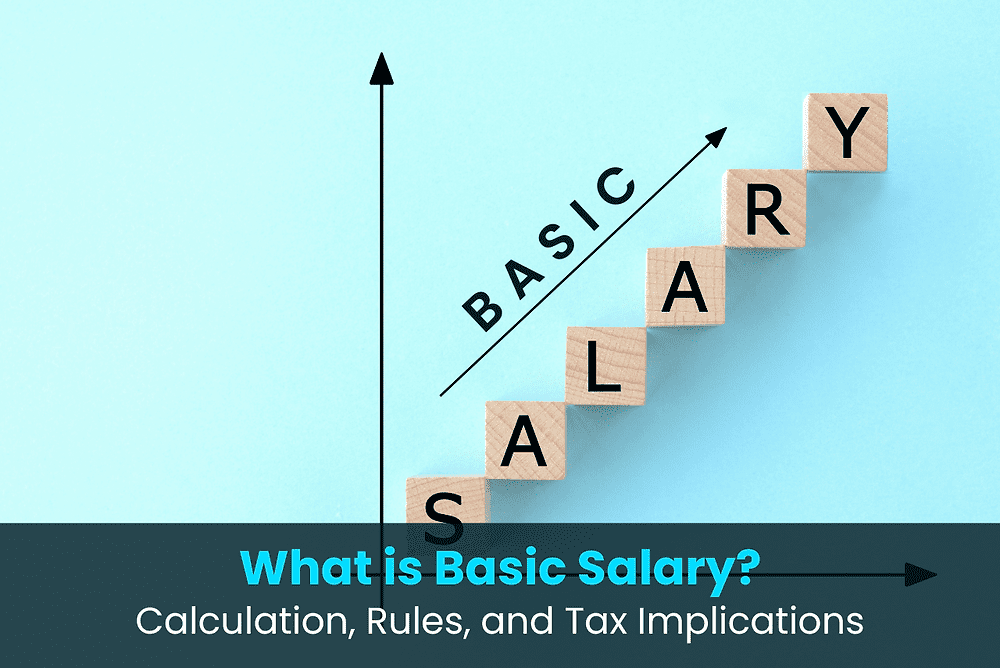
Base Pay Salary, often referred to simply as Base Salary, is the fixed amount of compensation an employee receives before any additional bonuses, benefits, or allowances are added. It forms the foundation of an employee’s total remuneration and is typically determined based on factors such as the individual’s skills, experience, and the overall pay structure of the organization.
In the context of Ghana’s public sector, the Single Spine Salary Structure (SSSS) is used to determine the Base Pay. The SSSS is a pay policy designed to align salaries across various public sector organizations, ensuring equity and transparency in compensation.
Calculation of Percentage Increment on Base Pay Salary
To calculate the percentage increment on the Base Pay Salary, employees can use the following formula:
New Base Pay Salary = Base Pay Salary + (Base Pay Salary × Percentage Increment)
Using the terms of the 2025 agreement, which stipulates a 10% increase in the Base Pay from January 2025 to December 2025, let’s walk through an illustrative example.
Illustrative Example
Let’s assume an employee has a monthly Base Pay Salary of 4,000 Ghana cedis. Using the terms of the 2025 agreement, the calculation would be as follows:
January 2025 to December 2025 (10% increase):
- New Base Pay Salary = 4,000 + (4,000 × 0.10)
- New Base Pay Salary = 4,000 + 400
- New Base Pay Salary = 4,400 Ghana cedis
This means that from January 2025, the employee’s Base Pay Salary will increase from 4,000 Ghana cedis to 4,400 Ghana cedis per month, reflecting the 10% increment agreed upon for 2025.
Conclusion
Understanding Base Pay Salary is necessary for employees to fully grasp the foundation of their compensation structure. As demonstrated in the example above, calculating percentage increments on Base Pay Salary is a straightforward process that can help employees anticipate changes in their earnings.
The recent agreement between the Government of Ghana and Organized Labour for the 2025 Base Pay adjustment serves as a practical illustration of how such calculations impact real-world scenarios. The 10% increase in the Base Pay for 2025 ensures that public sector workers in Ghana receive fair and transparent compensation, reflecting the collaborative efforts of all stakeholders involved.
For employees, this agreement not only provides financial relief but also reinforces the importance of collective bargaining in achieving equitable pay structures. As the new Base Pay takes effect in January 2025, public sector workers can look forward to improved compensation throughout the year.
Published By: Justice Donkoh | GESHub.org