
In a recent turn of events, the University Teachers Association of Ghana (UTAG) has voiced its strong opposition to the Ghana Tertiary Education Commission’s (GTEC) decision to suspend the accreditation of new academic programs across all public universities in the country.
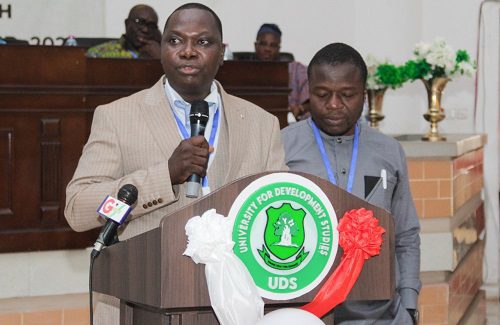
This decision, as highlighted by Professor Mamudu Akudugu, the National President of UTAG, was met with a resounding rejection at the 21st Biennial UTAG National Congress held in Tamale.
Professor Akudugu, in his inaugural address, emphasized that GTEC’s move was not in the best interest of tertiary education in Ghana. He pointed out that the academic world is evolving at an unprecedented pace, requiring universities to continually update their academic offerings to stay relevant and competitive.
Suspending the accreditation of new programs, he argued, could stifle progress and hinder the growth of Ghana’s higher education sector. He used the metaphor of “putting rot in the spokes of success” to illustrate the detrimental impact of such a decision.
Professor Akudugu contended that it was often GTEC, rather than the universities, that caused delays in issuing accreditation certificates for new academic programs. He called for GTEC to address its internal issues and expedite the process instead of unfairly shifting blame onto universities.
He also suggested that GTEC might be under-resourced and recommended seeking increased funding to enable them to perform their duties more efficiently.
Looking ahead, UTAG is poised to advocate for a review or amendment of the GTEC Act (Act 1023), which, according to Professor Akudugu, has given the Director-General of GTEC excessive authority over Vice-Chancellors. UTAG’s goal is to ensure that universities have the freedom to innovate in their academic programming and preserve academic freedom.
Professor Akudugu also stressed the importance of industrial harmony, urging the government to promptly implement the negotiated conditions of service for UTAG members. He called for a reevaluation of the Single Spine Salary Structure (SSSS) to better accommodate UTAG members or even to consider their exclusion from the SSSS.
His vision for decision-making in Ghana involves grounding it in empirical research to guarantee success and encouraged the government to allocate one percent of the country’s GDP to a national research fund for support.
The event’s chairman, Professor Seidu Al-Hassan, Vice-Chancellor of the University for Development Studies, called for unity among UTAG members, emphasizing that collective strength would deter any attempts to undermine their status.
In alignment with Professor Akudugu’s vision, he highlighted the need for research and academic work to be relevant to societal needs and problem-solving. Professor Solomon Nunoo, the immediate past UTAG National President, expressed gratitude to members for their unwavering support during his tenure.
In a message from Dr. Yaw Osei Adutwum, the Minister for Education, readiness to address the legitimate demands of all employees under the Ministry was affirmed. The government is committed to ensuring industrial harmony and fostering an environment that supports the growth of Ghana’s higher education sector.
Source: GESHub.org